The first trial excavation was carried out by archaeologists on the land belonging to the municipality lying near the pig farm already in 2017. Research work directly in the area of the pig farm, however, was not permitted at that time by the company AGPI, a. s., which was its owner. After the pig farm facility was taken over for administration by the Museum of Romani Culture, archaeological exploration took place from August 2019 in the area of the former pig farm. The research was carried out by archaeologists from the Faculty of Philosophy of the University of West Bohemia in Pilsen under the leadership of Pavel Vařeka.
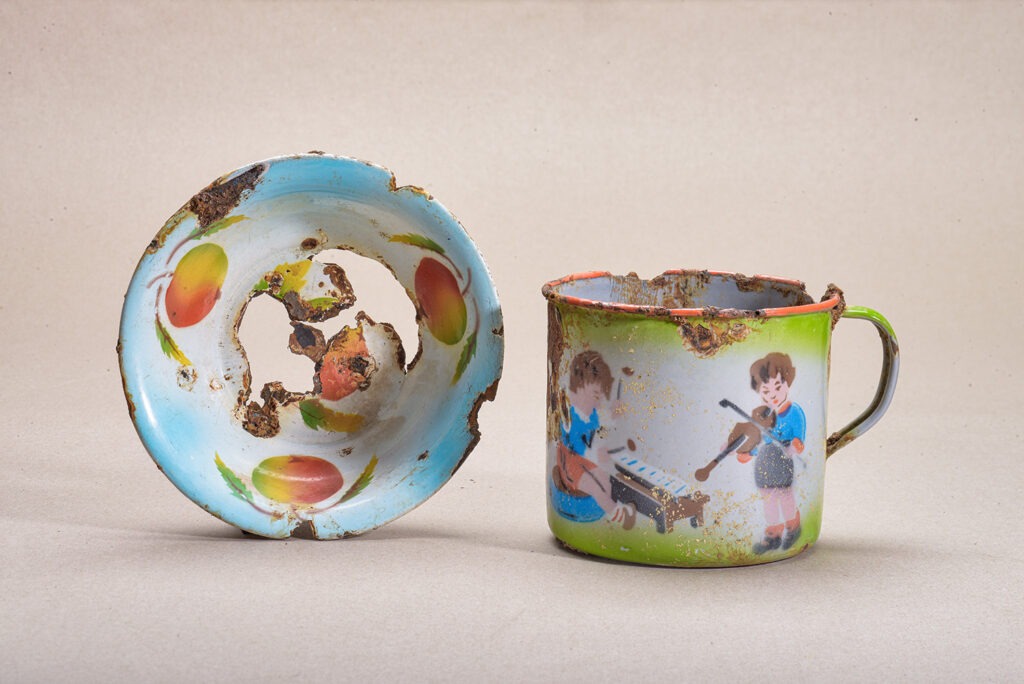
Photograph of finds from the waste pit – an enamel children’s cup and a bowl with a motif of fruit and musicians. Photo by the MRC: Ibra Ibrahimovič.
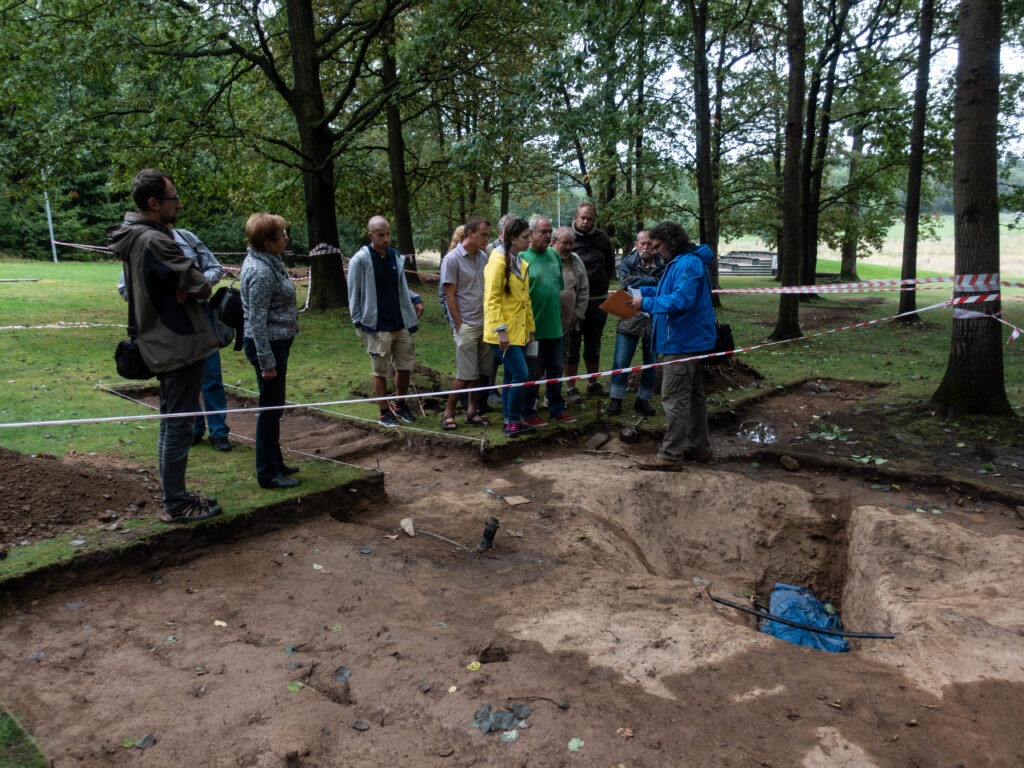
Photograph from the uncovering of two graves at the site of the emergency burial ground in the presence of representatives of the MRC and descendants of surviving prisoners. Photo by the MRC: Adam Holubovský, 2 September 2019
Proper research confirmed that the pig farm had been located on the site where, in the 1940s, the concentration camp stood. The remains of the camp were uncovered, remnants of prisoner barracks, foundations of two large barracks for child prisoners, but also a washhouse, a laundry, and a disinfection station. Crucial was the waste pit, where unique objects from the time of the functioning of the camp were found, belonging to the prisoners and thrown into the pit by the guards. “Until the 1970s, when the pig farm was being built, the remains of the camp on the surface must clearly have been visible,” mentions Pavel Vařeka as one of the most surprising findings of the archaeological research.