On 8 August 1940, a disciplinary labour camp was opened in Lety u Písku. It was intended for healthy men over 18 years of age serving a court-imposed sentence.
In March 1942, with retroactive effect from January of the same year, the disciplinary labour camp was renamed a collection camp. Of approximately 700 “punitive inmates,” about 68 had the letter C as “Gypsy” recorded next to their names in the register.
On 10 July 1942, a Decree “on Combating the Gypsy Menace” was issued, which was an exact copy of the Reich model, and it launched an openly racial anti-Roma policy. It ordered local gendarmerie stations to carry out a census of “Gypsies and Gypsies of mixed-bloods,” whose aim was the precise registration of Roma and Sinti and mixed-blood Roma and Sinti in the Protectorate, regardless of their way of life or livelihood.
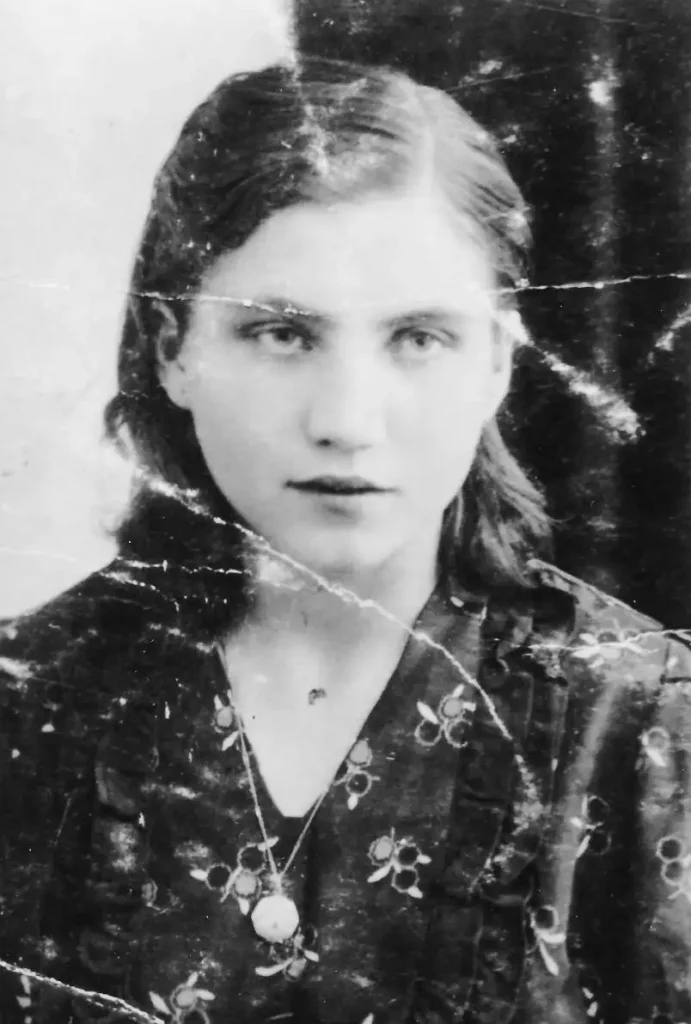
Božena Pflegerová at the age of 14. Her newborn daughter died in the camp. From the family album of Mrs. Emílie Berry.
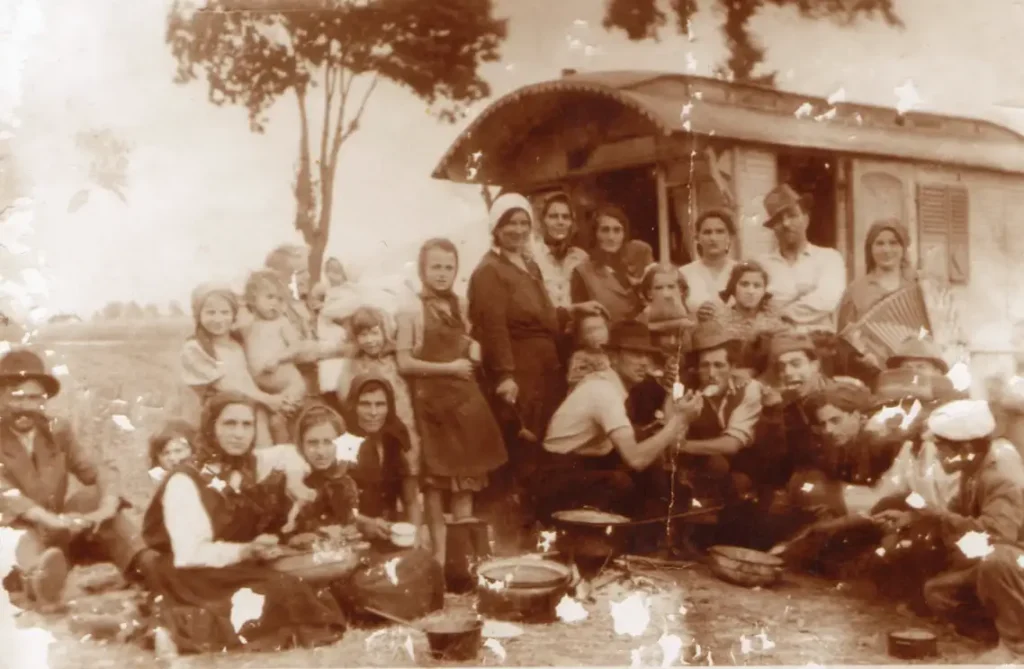
The Richter and Weinrich families, probably in 1938/1939. From the family archive of survivor Jan Hauer.
On 10 July 1942, a Decree “on Combating the Gypsy Menace” was issued, which was an exact copy of the Reich model, and it launched an openly racial anti-Roma policy. It ordered local gendarmerie stations to carry out a census of “Gypsies and Gypsies of mixed-bloods,” whose aim was the precise registration of Roma and Sinti and mixed-blood Roma and Sinti in the Protectorate, regardless of their way of life or livelihood.
The census was carried out on 2 August 1942. Approximately 2,500 Roma and Sinti were sent directly from the registration at the gendarmerie stations to the newly established concentration camps for Roma and Sinti in Lety u Písku and in Hodonín u Kunštátu.