After the camp closed in 1943, the authorities ordered that the individual barracks and buildings be dismantled and – after disinfection – reused. However, later archaeological research showed that the camp was sprinkled with chloride lime and almost entirely burned due to fears of a typhus outbreak. At the emergency burial site near the camp, the municipality of Lety was ordered not to build on the area for 40 years. At the time the emergency burial site was created, the municipality committed itself to maintaining it until 1993. This commitment, however, was not fulfilled, and the site remained unlocated for several decades. Discussions on the construction of a large-capacity pig farm, and on the search for an appropriate site, began in the early 1970s. In 1974 and 1978, a large-capacity pig farm with a capacity of 13,000 pigs was built in the locality of Lety–Bobina.
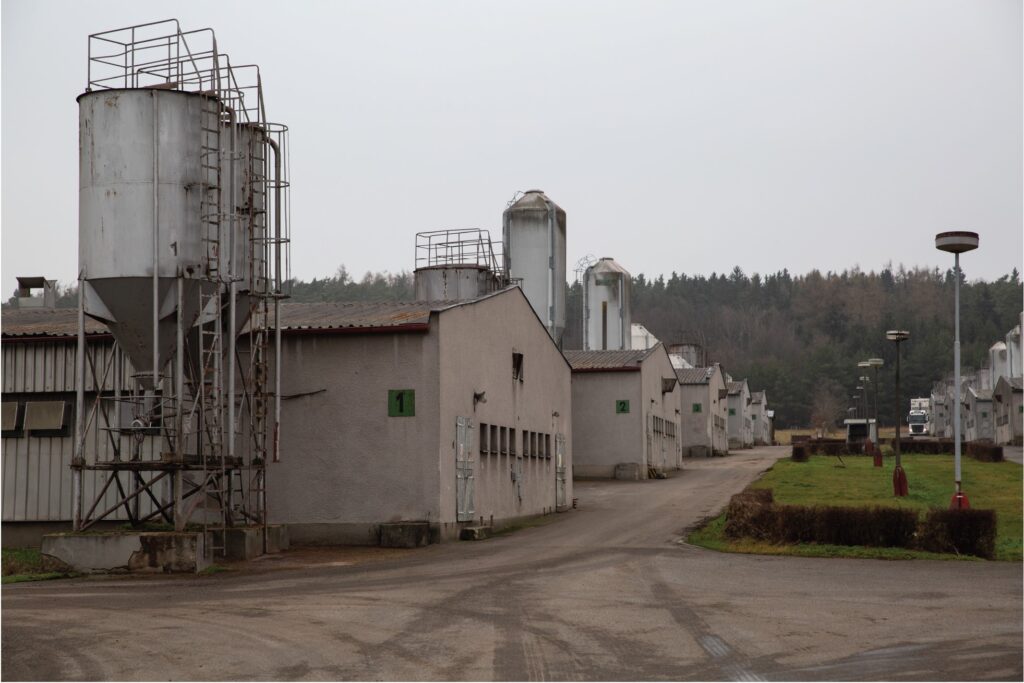
Halls of the large-capacity pig farm in Lety u Písku. Photo by the MRC: Adam Holubovský, 11 January 2018.
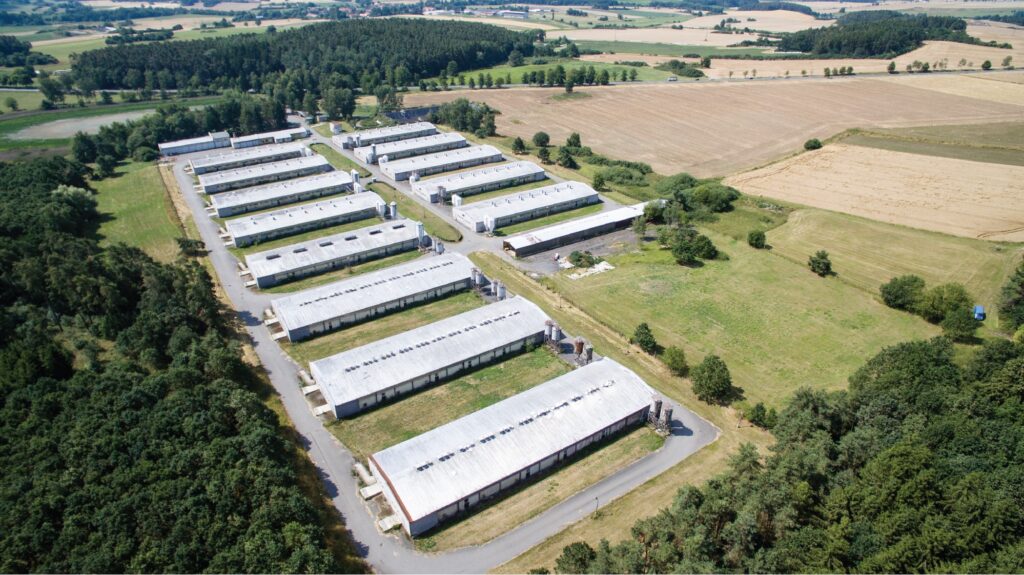
Drone photograph of the large-capacity pig farm in Lety u Písku. Photo by MRC: Adam Holubovský, 19 July 2019.
One of the survivors stated that “as soon as the buildings of the pig farm were erected a few hundred meters from the mass graves, none of the descendants ever went there again.” At a broader societal level, public interest in the fate of this place – and, more generally, in addressing the racial persecution of Roma in the Protectorate – emerged only in the post-revolutionary period, especially after the American journalist and genealogist Paul Polansky publicized the existence of the Lety camp abroad in an exaggerated form. The subject had been professionally researched since the 1970s by the historian Prof. Ctibor Nečas, but the findings were not commonly accessible to the general public.