All imprisoned persons from the age of 10 had to work; in the camp regulations it was stated: “…both men and women shall work. Children shall work according to their strength and abilities.” Women (even with infants on their backs) and girls crushed stones into gravel, loading the stones onto narrow-gauge carts. The work was hard, strenuous, and performed in all weather, six days a week, 10–12 hours a day. Men were deployed to work in the stone quarry, on the construction of the road, or in the surrounding forests.
The rations of food and beverages did not correspond to regulations nor to the needs of the exhausted and starving prisoners. Already during the existence of the camp, proven theft of supplies and reduction of rations by the camp leadership further worsened living conditions and the hope of survival.
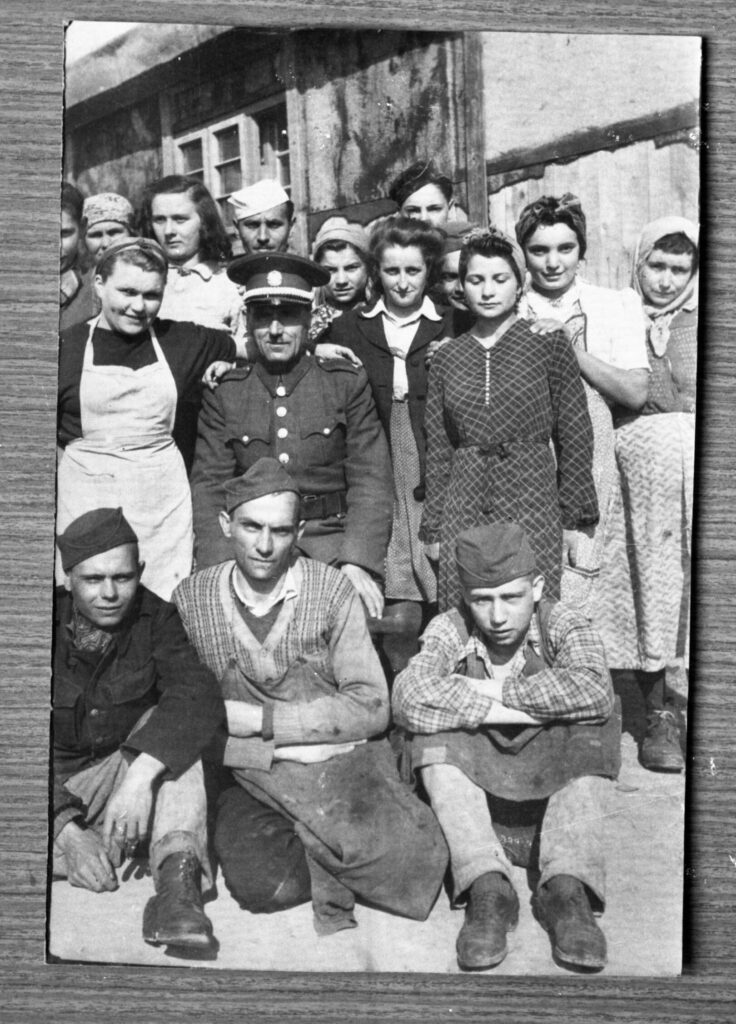
Photograph of the staff of the Lety camp and also of some prisoners deployed for auxiliary work in the camp, 1942/1943. Source: from the archive of Professor Ctibor Nečas.
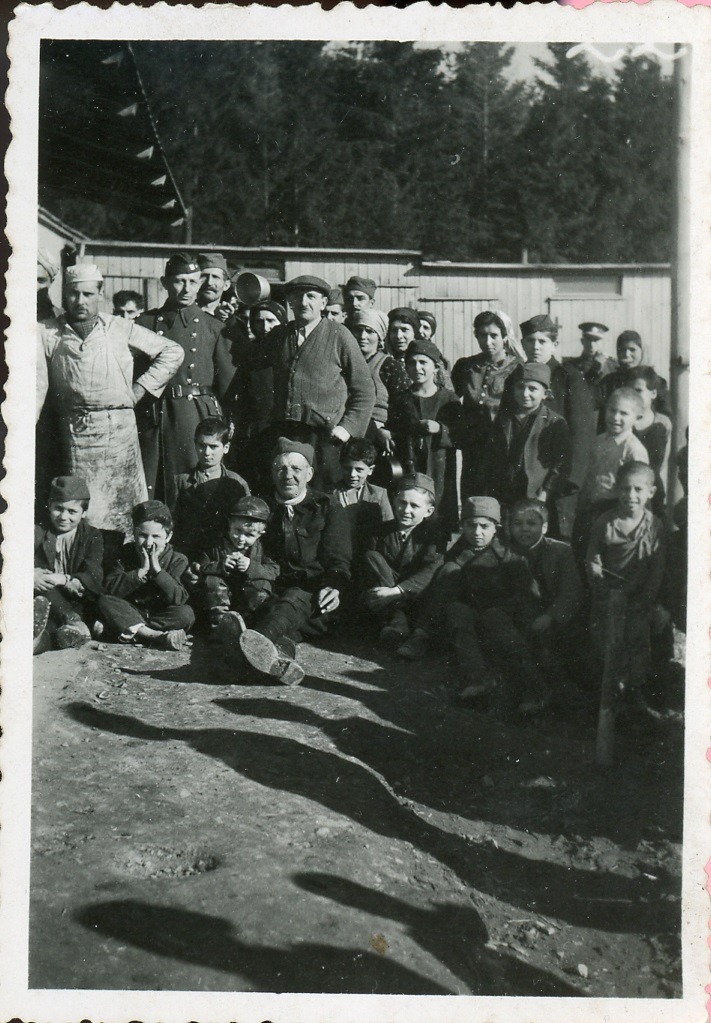
Group photograph of Lety prisoners, taken by the guards. In the front one can see child prisoners, 1942/1943, from the MRC collection. Source: collection of Marie Bártová, Ištvánová, Institute of Ethnology of the Czech Academy of Sciences, v.v.i., photo-documentation collection – inv. no. 095171HK.
Women who arrived in the camp already pregnant were forced to give birth without medical care or proper supervision and after giving birth had to return to hard labour. During the functioning of the concentration camp, 36 children were born here, 29 newborns died during the first months of life, only four of them survived internment. Jiří Růžička was transported as a one-month-old newborn to the extermination camp Auschwitz II-Birkenau, where he was murdered on 29 June 1943.